
Rating: ⭐⭐⭐⭐⭐️ (5/5)
- Ramayana Movie Review:
- Ranbir Kapoor as Lord Rama: A Performance For The Ages
- Yash as Ravana: The Screen Belongs To Him Whenever He Appears
- Sai Pallavi, Ravie Dubey And The Supporting Cast Shine
- Jatayu vs Ravana: A Spectacle That Has To Be Seen On The Biggest Screen
- The Emotional High Points Make Ramayana More Than A Visual Extravaganza
- A.R. Rahman And Hans Zimmer Elevate The Experience
- Nitesh Tiwari's Vision And The Film's Few Flaws
- Ramayana Post-Credit Scene: A Perfect Setup For Part Two
There are films you watch, films you experience, and then there are films that leave you completely overwhelmed by the sheer scale of their ambition. Nitesh Tiwari’s Ramayana: Part One belongs to the third category.
Bringing India’s greatest epic to the big screen was never going to be an easy task.
The expectations were enormous, the responsibility even greater, and the challenge of translating a story that generations have grown up with into a cinematic experience was immense.
Yet, with Ramayana, Nitesh Tiwari and producer Namit Malhotra deliver something genuinely special: a visually spectacular, emotionally stirring and ambitious cinematic experience that makes you appreciate the possibilities of Indian cinema.
Is it flawless? No. There are a couple of stretches where the pacing slows down, and certain sequences could have benefited from tighter editing.
But when the film reaches its emotional and action high points, it is difficult not to be swept away.
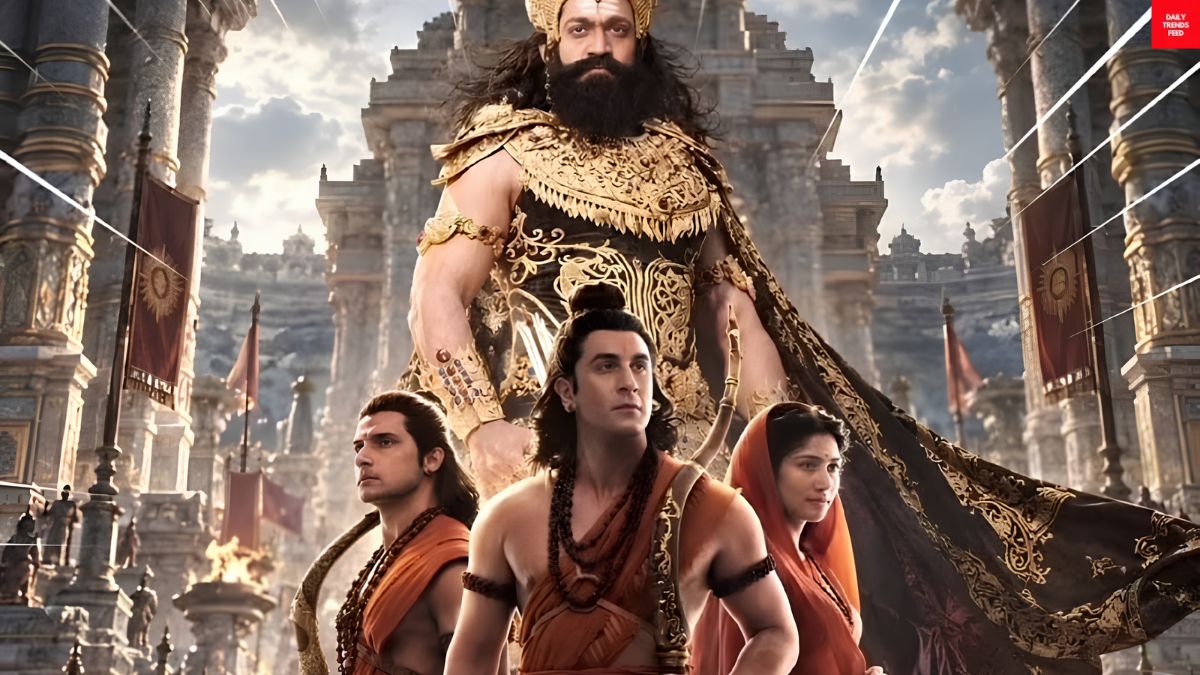
Ramayana movie review Ranbir Kapoor delivers a career-defining performance as Lord Rama, while Yash shines as Ravana in Nitesh Tiwari’s epic spectacle.
More importantly, Ramayana understands that its greatest strength lies not just in its scale, but in the emotions and relationships at the heart of the epic.
Ramayana Movie Review:
Ranbir Kapoor as Lord Rama: A Performance For The Ages
If there is one performance that will stay with me long after the credits roll, it is Ranbir Kapoor as Lord Rama.
This is arguably the finest performance of his career. What makes his portrayal so effective is the restraint.
He doesn’t approach Rama with exaggerated expressions or unnecessary dramatic gestures. Instead, he brings an extraordinary sense of serenity, innocence, dignity and emotional depth to the character.
There is a certain calmness in his screen presence that makes you feel at peace whenever he appears.
His dialogue delivery, expressions and subtle body language come together beautifully. You don’t constantly see Ranbir trying to perform the role.
You gradually begin to see Rama.
The Vanwaas sequence is easily one of the film’s biggest emotional highlights.
The way Ranbir portrays Rama’s acceptance of exile, his emotions and his bond with his family is genuinely moving. It is the kind of sequence that can leave you with tears in your eyes.
His chemistry with Arun Govil’s King Dashrath is another major strength.
Their emotional exchanges bring out the pain of a father and son caught in circumstances beyond their control.
The Bharat Milap sequence with Adinath Kothare is equally touching, capturing the emotional weight of the brothers’ relationship.
And then there is Ranbir’s voice modulation in the Lord Parshuram sequence. The command, intensity and transformation in his voice are remarkable. It is a reminder of the range he possesses as an actor.
After performances in films like Rockstar, Barfi!, Sanju and Animal, Ranbir has given himself another defining role.
This is not merely a convincing portrayal of a mythological character. It is a performance built on sincerity, restraint and an understanding of the character’s emotional core.
Ranbir Kapoor doesn’t just play Lord Rama. He makes you feel his presence.
Yash as Ravana: The Screen Belongs To Him Whenever He Appears
If Ranbir brings serenity and grace to Ramayana, Yash brings fire, intensity and an intimidating presence as Ravana.
He is absolutely magnificent.
From his introduction to the moments where his anger takes over, Yash commands attention with an effortless screen presence.
His performance has layers, and the film deserves appreciation for giving Ravana a substantial backstory rather than presenting him as a straightforward antagonist.
Understanding his past and motivations adds an interesting dimension to the character. It helps establish the world around him and makes his presence feel even more formidable.
Yash’s physicality, expressions, dialogue delivery and sheer intensity make him one of the biggest highlights of the film.
The clash between Yash’s Ravana and Kunal Kapoor’s Indra is particularly impressive. Their confrontation delivers the scale and intensity expected from a film of this magnitude.
It is difficult to imagine many actors bringing this combination of authority, rage and screen presence to Ravana. Yash owns the character, and his performance gives the film a powerful counterpoint to Ranbir’s calm and composed Rama.
Sai Pallavi, Ravie Dubey And The Supporting Cast Shine
Sai Pallavi as Sita brings grace, simplicity and emotional warmth to the film.
Her portrayal is beautifully restrained, and she carries the character with dignity.
Ravie Dubey as Lakshman is another pleasant surprise. He shares a wonderful dynamic with Ranbir, and their brotherly bond is among the film’s most touching elements.
Arun Govil as King Dashrath is particularly effective in the emotional portions. Given his iconic association with the character of Rama, seeing him portray Dashrath adds another layer of emotion.
Rakul Preet Singh as Shurpanakha makes a strong impression, bringing the required intensity and presence to the character.
Lara Dutta also contributes effectively as Kaikeyi, while the supporting cast helps establish the larger world of the epic.
The performances collectively ensure that the film’s emotional foundation remains intact despite the enormous visual canvas.
Jatayu vs Ravana: A Spectacle That Has To Be Seen On The Biggest Screen
If I had to pick one sequence that defines the technical ambition of Ramayana, it would undoubtedly be Jatayu versus Ravana.
This is filmmaking on an extraordinary scale.
The aerial confrontation, the visual detailing, the action choreography and the sheer magnitude of the sequence make it one of the most memorable moments in the film. It is intense, visually rich and genuinely immersive.
The tornado sequence is another major visual highlight. The scale and execution make it a treat for audiences who enjoy large-format cinematic spectacles.
The sequence featuring Rama taking on the Rakshasa army is equally impressive.
The action has a sense of scale that makes you appreciate the amount of planning and work that has gone into bringing this world to life.
The film also delivers through Yash’s confrontations, particularly the action involving Kunal Kapoor’s Indra.
DNEG deserves enormous credit for its visual effects work. The production design, environments, costumes and visual detailing help create a world that feels considerably larger than anything we have traditionally seen in Indian mythological cinema.
While a few visual moments may not land with equal effectiveness, the overall technical achievement is remarkable. The ambition is visible in almost every frame.
Kudos to makers, they have given credits to thousands of technicians who worked on this magnum opus as end credits roll and roll!
The Emotional High Points Make Ramayana More Than A Visual Extravaganza
It would be easy to judge Ramayana purely on its visual effects and action sequences. But that would overlook what makes its strongest moments work.
For me, the Vanwaas sequence is the emotional heart of the film. It brings together Ranbir’s restrained performance, the pain of separation and the relationships that define Rama’s journey.
The bond between Rama and Jatayu is another beautiful touch. Their interactions bring warmth to the narrative, making the eventual confrontation involving Jatayu and Ravana even more impactful.
Bharat Milap is equally effective. It is a sequence built on emotion rather than spectacle, and it reminds you why these relationships have remained so important across generations.
The film’s emotional moments are elevated by its dialogues and background score. When the writing, performances and music come together, Ramayana reaches the cinematic heights it promises.
A.R. Rahman And Hans Zimmer Elevate The Experience
The coming together of A.R. Rahman and Hans Zimmer was one of the most exciting aspects of this project, and their contribution is particularly effective in the film’s larger emotional and action sequences.
The sound design also deserves appreciation. In a film designed for the biggest screens, the soundscape plays a crucial role in making the world feel immersive.
Nitesh Tiwari’s Vision And The Film’s Few Flaws
Nitesh Tiwari deserves credit for taking on a project of this scale and approaching it with considerable conviction.
The film’s opening 30 minutes establish its world, characters and central conflict effectively. Giving Ravana’s backstory meaningful screen time is also a smart decision, as it adds context to the character and helps establish the larger conflict.
The film is not without its shortcomings, though.
The first instalment also leaves several major developments for the next chapter, which naturally makes the wait for Part Two even more interesting.
However, these issues do not take away from the overall experience. The film’s strongest moments are powerful enough to leave a lasting impression.
Ramayana Post-Credit Scene: A Perfect Setup For Part Two
The post-credit scene is a terrific addition and does exactly what it needs to do: build anticipation for the next instalment.
With Sunny Deol set to portray Hanuman, the possibilities for Part Two are enormous. After establishing the world and laying the emotional and narrative foundation, the film leaves audiences eager to witness the next phase of Rama’s journey.
The scale of the upcoming conflict, the characters yet to take centre stage and the promise of even bigger action make the sequel one of the most anticipated Indian films on the horizon.
Ramayana: Part One is not a perfect film, but it is an extraordinary cinematic achievement.
What makes it special is the combination of ambition and emotion. The film gives us breathtaking visuals, memorable action sequences, powerful performances and moments that genuinely touch the heart.
Ranbir Kapoor delivers a career-defining performance as Lord Rama, while Yash is phenomenal as Ravana. Sai Pallavi brings grace to Sita, Ravie Dubey makes an impressive Lakshman, and the supporting cast adds depth to the world.
Nitesh Tiwari and Namit Malhotra deserve appreciation for bringing an epic of this magnitude to the big screen with such conviction. The technical ambition, production design and work by DNEG make it a major step forward for Indian cinematic spectacle.
There are minor pacing issues, and not every creative choice works equally well. But the overall experience is immensely rewarding, especially when watched on an IMAX screen.
I walked in with enormous expectations, and while the film has a few imperfections, its finest moments exceeded them. The Vanwaas sequence, Bharat Milap and the Jatayu versus Ravana confrontation are experiences that will stay with me.
This is the kind of film that reminds you why watching cinema on the big screen matters.
Ramayana is a celebration of storytelling, scale, emotion and Indian cinema’s growing ambitions. It sets up an exciting second chapter and gives audiences plenty to look forward to.
A grand spectacle. A phenomenal Ranbir Kapoor. A commanding Yash. A cinematic experience worth celebrating. Jai Shri Ram!
Rating: ⭐⭐⭐⭐⭐️(5/5)
Lead Image: DNEG, District
Also Read: